


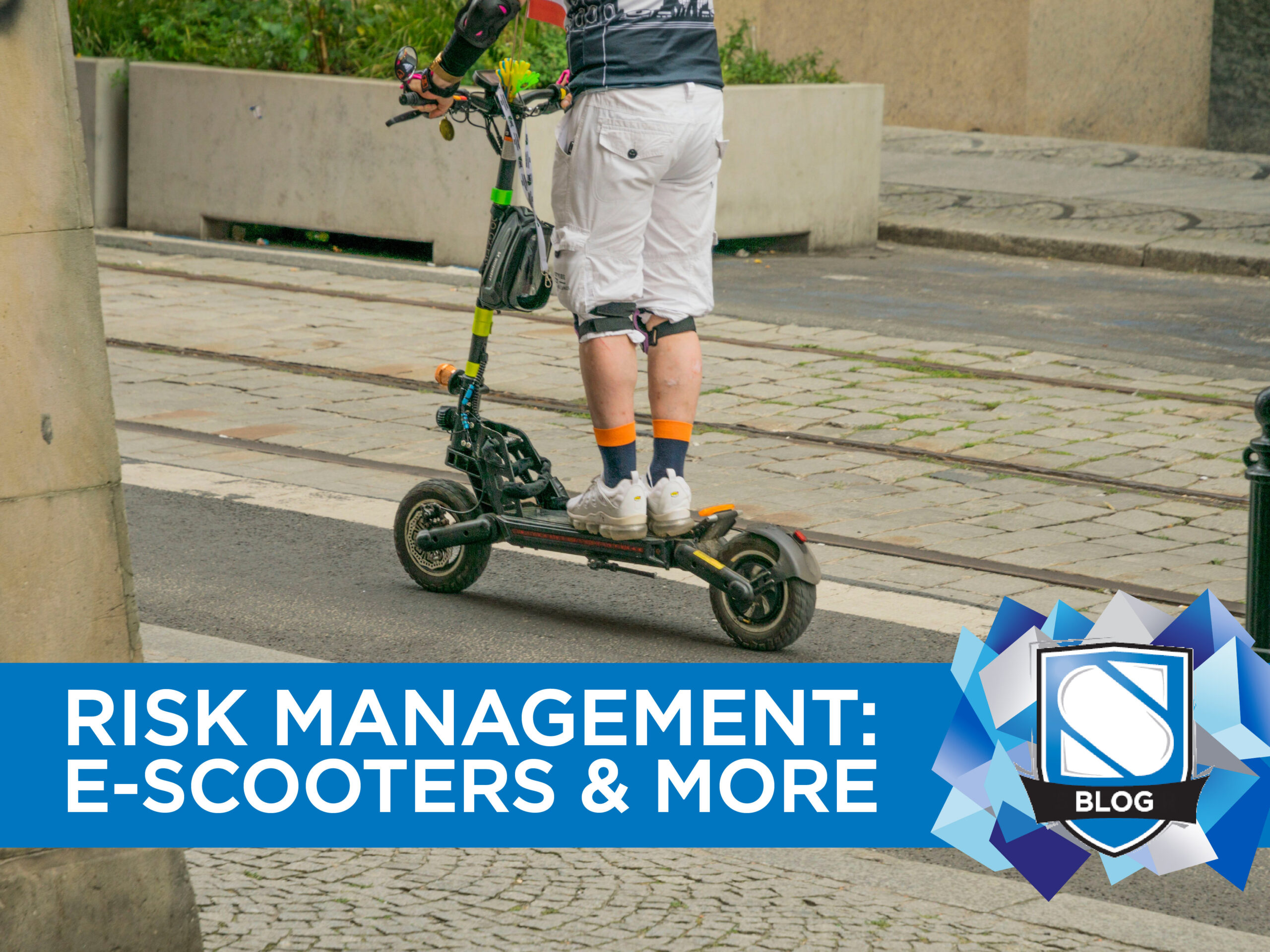
Micromobility devices such as e-scooters, e-bikes, and other personal transportation devices are becoming a regular part of the landscape in urban communities. They offer practical benefits: shorter trips can be completed without a car, transportation options can be expanded for residents and visitors, and municipalities can support broader goals around active transportation and reduced emissions. However, these benefits must be weighed against a range of safety and liability considerations.
For municipalities, the increase in use of micromobility devices raises important questions about where these devices should be permitted, how they should be regulated, and what level of infrastructure is appropriate to support safe use.
E-scooters can be riskier than e-bikes or traditional bicycles because of their small wheels, higher centre of gravity, and relatively fast operating speeds making riders more vulnerable to uneven pavement, potholes, debris, surface changes, and other road or trail defects. When injuries occur, municipalities may face claims alleging that infrastructure was not properly inspected, maintained, or repaired.
Micromobility Regulation in Ontario
Regulation is also an important consideration. In Ontario, e-scooters are only permitted on roads or sidewalks where a municipality has passed a by-law under the province’s guidance. This means municipalities should not treat e-scooter use as a purely informal activity. Instead, they should assess local travel patterns, roadway conditions, sidewalk networks, trail systems, downtown congestion, enforcement capacity, and public expectations before deciding whether to permit e-scooters and under what conditions.
If third-party shared micromobility systems are also considered, additional due diligence is needed. Contracts should clearly address insurance, indemnification, data privacy, cybersecurity, device maintenance, parking management, user education, incident reporting and operator responsibilities. Municipalities should consider how complaints will be tracked, how improperly parked devices will be managed, and how quickly hazards can be addressed and corrected.
Rider behaviour is another major risk factor. Helmet use tends to be low among users, while risky behaviours such as sidewalk riding, impaired operation, underage riding, and carrying passengers can increase the likelihood of crashes. Public education, consistent signage, and coordination with police and by-law enforcement can help reduce these behaviours and promote safer use.
Risk Management Best Practices for E-Scooters
- Confirm the legal framework before permitting use. Review applicable provincial rules and pass a municipal by-law where required before allowing e-scooters on roads, sidewalks, trails or other municipal property
- Define where e-scooters may operate. Establish clear rules for roads, bike lanes, sidewalks, parks, trails, downtown areas, transit hubs, and other high-traffic areas
- Assess infrastructure condition. Review pavement, curb cuts, trail surfaces, drainage grates, potholes, cracks, and surface transitions that could create hazards for small-wheeled devices
- Strengthen inspection and maintenance procedures. Maintain documented inspection schedules, repair standards, complaint tracking and response timelines to support both safety and claims defensibility
- Set speed, parking and operating requirements. Consider rules for maximum speeds, no-ride zones, designated parking areas, sidewalk restrictions and device staging
- Coordinate enforcement and education. Work with police, by-law enforcement, public health and communications teams to address helmet use, impaired riding, underage riding, passenger carrying and sidewalk conflicts
- Review insurance and contracts carefully. For shared systems, require appropriate insurance, indemnity provisions, maintenance obligations, incident reporting, data protection and performance standards
- Plan for incident response. Establish procedures for reporting crashes, preserving records, responding to complaints and addressing recurring problem locations
- Address lithium-ion battery safety. Promote safe charging, storage and inspection practices, and ensure municipal staff understand the risks of damaged batteries, aftermarket chargers and thermal runaway fires
- Monitor and adjust the program. Use incident data, user feedback, enforcement trends and infrastructure observations to refine policies over time
Lithium-ion Battery Risks
As noted above, lithium-ion battery safety should also be part of any micromobility risk management strategy. E-bikes and e-scooters rely on rechargeable batteries that can create serious fire hazards if they are damaged, modified, overcharged or paired with inappropriate aftermarket chargers. Clear policies and public education can help reduce the likelihood of charging-related incidents and improve preparedness if a battery fire occurs.
READ MORE: The Risks of Lithium-Ion Batteries at Home – Staebler Insurance
Micromobility continues to evolve. A proactive approach allows municipalities to support transportation innovation while reducing preventable injuries and managing liability.
By combining clear local rules, infrastructure practices, strong contracts, and ongoing monitoring, municipalities can better position themselves to make informed decisions about e-transportation and other emerging mobility devices.
Safety when Riding on a Micromobility Device
From the City of Kitchener, here are the rules and best practices when riding on an e-scooter:
To ride an e-scooter, you must:
- be 16 years of age or older
- wear a helmet
When riding an e-scooter, please follow these rules:
- you cannot take a passenger (only one person is allowed on each e-scooter)
- do not ride on the sidewalk (if you need to use a sidewalk to get to a location or parking, you must walk your e-scooter)
- ride on the right side of the road, keeping as close to the edge of the road as possible
- if you’re on a mixed-use trail, don’t ride much faster than the pedestrians on the trail
- yield to pedestrians as necessary, and keep a safe distance between you
- do not park your e-scooter or leave it in a way that blocks a road or sidewalk
The speed limit for e-scooters in Ontario is 24 km/h. This applies on roads, in bike lanes and on trails.
Credit: This blog post was developed with reference to risk management guidance from the Risk Management Centre of Excellence by Intact Public Entities.
. . .
Staebler Insurance is a general insurance broker specializing in car insurance, home insurance, small business insurance, and commercial insurance. Staebler Insurance Brokers proudly serve Kitchener, Waterloo, Cambridge, Guelph, Stratford, Listowel, Fergus, Elora, Wellington County, Perth County, Waterloo Region, the Greater Toronto Area, Golden Horseshoe, Niagara Region, and all over beautiful Ontario, Canada. 🍁 Get a Quote to get started today.









0 Comments