


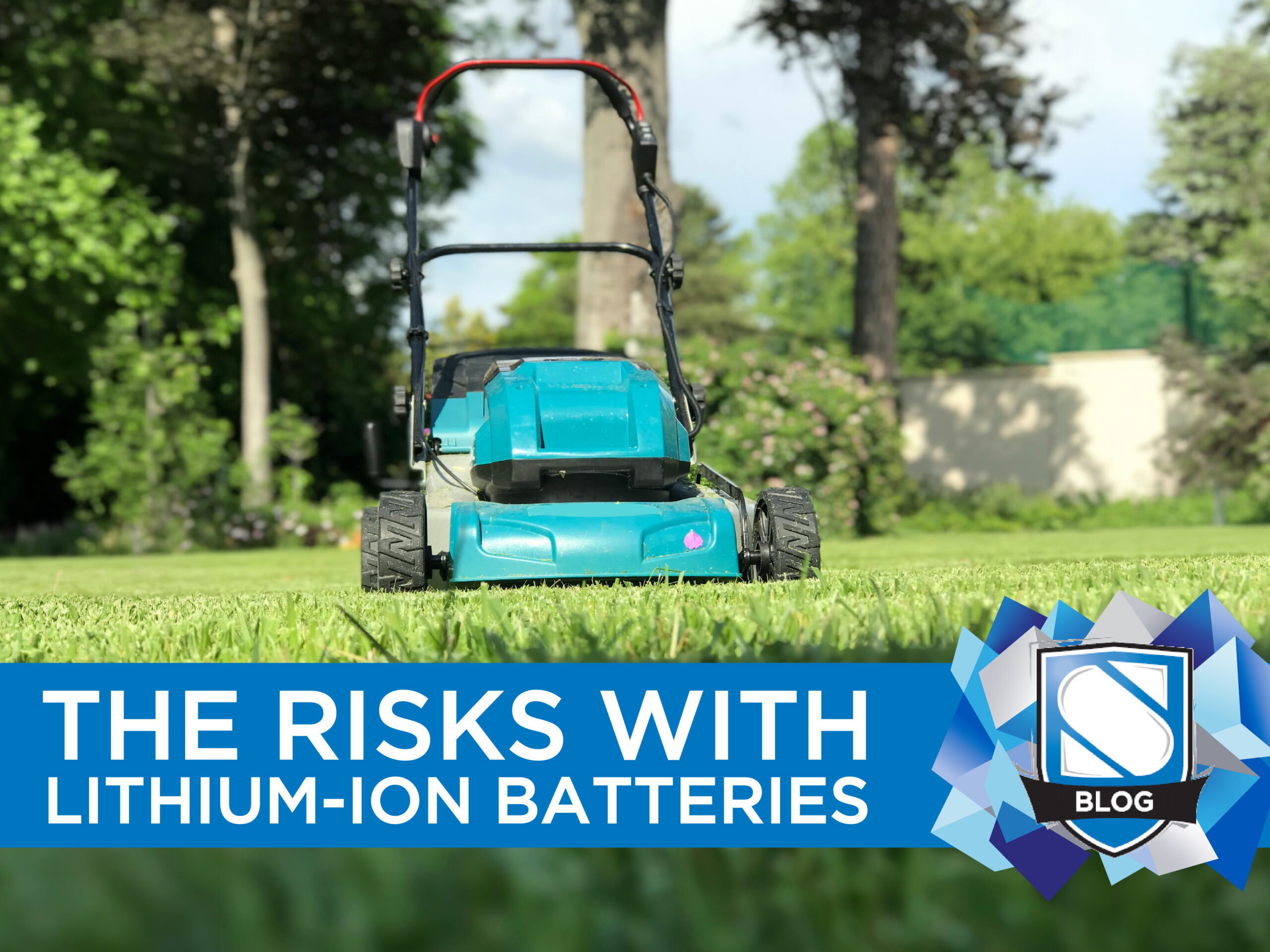
With spring season underway, folks head to their garages and sheds to grab the familiar tools of the season, from lawnmowers and trimmers to leaf blowers and other battery-powered equipment.
While lithium-ion batteries make outdoor maintenance more convenient, they also require more careful handling. Unlike standard household batteries, lithium-ion batteries can pose a serious fire risk if they are damaged, overcharged, or used incorrectly — making it important for homeowners to take extra precautions.
Sharing inspiration from our insurance company partner, Aviva Insurance, here are some important safety tips to consider as you begin your outdoor spring season.
Preparing Your Seasonal Tools for Safe Use
Before you begin your gardening and yard work, take time to inspect tools that have been sitting around over the winter. Months in storage can cause batteries and charging equipment to collect dust, moisture, and temperature changes, all which can affect their condition.
- To help reduce the risk of overheating or fire, start by checking the battery casing and charging ports for any visible damage or swelling.
- In addition, make sure you’re using the correct charger designed specifically for that battery. Chargers can get misplaced and using a generic replacement can increase the risk of overheating.
- Finally, confirm that the battery is properly inserted according to the manufacturer’s instructions, since incorrectly installed batteries may cause a fire.
Best Practices for Charging and Storing
Unlike typical household items using batteries like clocks and remotes, lithium-ion batteries require more care and attention to help prevent overheating and reduce the risk of fire.
A few good habits to keep in mind:
- Avoid leaving batteries plugged in after they’ve reached a full charge, as overcharging can increase heat buildup
- Set a timer or phone alert to remember to unplug them
- When charging, place batteries on a flat, cool surface away from direct sunlight and combustible materials such as paper or upholstery
- Plug chargers directly into a wall outlet instead of using power bars or extension cords
- Avoid charging batteries overnight or while you’re away from home
- Unattended charging is one of the most common factors in battery-related fires
Properly Disposing of Used Batteries
If a lithium-ion battery no longer holds a charge or shows signs of damage, it should be removed from use and disposed of responsibly. These batteries should never be placed in household garbage or curbside recycling, as damaged or discarded batteries can still pose a fire risk.
Take old batteries to a designated hazardous waste program or approved drop-off locations in your community. Using the proper disposal channels helps reduce the risk of fires during handling and waste processing, while also supporting safer environmental practices.
To find a battery drop-off location near you, visit Recycle Your Batteries, Canada Battery Recycling made easy!
. . .
Staebler Insurance is a general insurance broker specializing in car insurance, home insurance, small business insurance, and commercial insurance. Staebler Insurance Brokers proudly serve Kitchener, Waterloo, Cambridge, Guelph, Stratford, Listowel, Fergus, Elora, Wellington County, Perth County, Waterloo Region, the Greater Toronto Area, Golden Horseshoe, Niagara Region, and all over beautiful Ontario, Canada. 🍁 Get a Quote to get started today.










0 Comments